Turtle Mountain Forest Nursery

Grown for winters that don't negotiate.

Bareroot seedlings and potted trees, grown from the Turtle Mountains for Zone 3 and colder — bound for shelterbelts, riparian buffers, and backyards across the region. Every species we carry is chosen first for hardiness, then for how badly it's needed on your ground.

Also growing a limited run of wholesale seedlings — Spring 2029, contact for pricing.

What We Grow

Retail trees, ready for your yard.

For homeowners & landscapers

Retail Potted Trees

Trade-gallon potted trees ready to plant the day you buy them. In-demand, cold-hardy species for yards, farmsteads, and small landscaping jobs — $20 per tree, available starting 2027.

See retail species & pricing

We also grow a limited run of wholesale seedlings for conservation districts and farmers — Spring 2029 pickup, contact for pricing.

Our Standard

Built for Zone 3, no exceptions.

Hardy stock, full stop

Every species in our catalog is rated Zone 3 or colder. If it can't take a Turtle Mountain winter, we don't grow it.

Grown to purpose

Seedlings sized and priced for large conservation plantings; potted trees sized and priced for the yard. Nothing in between pretending to be both.

Rooted here

Grown on-site in the Turtle Mountain region, acclimated to prairie wind, heavy clay, and a short growing season — not trucked in from a warmer zone.

About Us

Founded 2024, in the Turtle Mountains.

Turtle Mountain Forest Nursery was founded in 2024 by Tanner Lord, founder and director, with a single mission: growing high-quality seedlings for reforestation, conservation, and landscaping projects — bred for a climate most nurseries won't touch.

Why zone 3, and nothing softer

The Turtle Mountains sit on the edge of the aspen parkland, where glacial hills break up open prairie and winters run long and hard. Most commercial nursery stock is bred for a milder zone and struggles here. We flipped that: every species we grow already thrives in this climate, so the trees we sell are ready for the ground they're going into, not just able to survive it.

That means slower catalog growth than a general nursery, but it also means conservation districts, farmers, and landowners can plant our stock without gambling on whether it'll make it through the first winter.

Who we grow for

  • Conservation districts & watershed groups planning shelterbelts, living snow fences, and riparian buffer restoration.
  • Farmers & ranchers establishing windbreaks around fields, feedlots, and homesteads.
  • Landowners reforesting marginal ground or stabilizing streambanks.
  • Homeowners & landscapers who want trees that are proven for this climate, not just available.
Where We're Headed

A young nursery, growing on a real timeline.

2024
Turtle Mountain Forest Nursery founded by Tanner Lord in Bottineau County, ND — the first of two experimentation years testing wholesale seedling procedures alongside limited retail production.
2025
Second experimentation year, continuing to refine wholesale seedling procedures with limited retail production.
2026
Closed for the season for major updates to production, with a shift in focus toward retail tree planting and landscaping.
2027
First retail crop of trade-gallon potted trees ready for pickup — cold-hardy landscape species at $20 per tree.
2028
Wholesale seedling production begins — bareroot and cutting-grown stock started for conservation districts and farmers.
2029
First wholesale seedling crop ready for pickup — fast, easy-to-establish conservation species for shelterbelts and riparian plantings.
Retail · Available 2027

Trade-gallon potted trees, $20 each.

In-demand, cold-hardy species for yards, farmsteads, and small landscaping jobs — grown on in the Turtle Mountains and ready to plant the day you pick them up.

The 2027 Retail Lineup

Flat rate: $20 per tree

Trade-gallon container stock, available starting 2027. All species below are hardy to Zone 3 or colder and proven in the Turtle Mountain region.
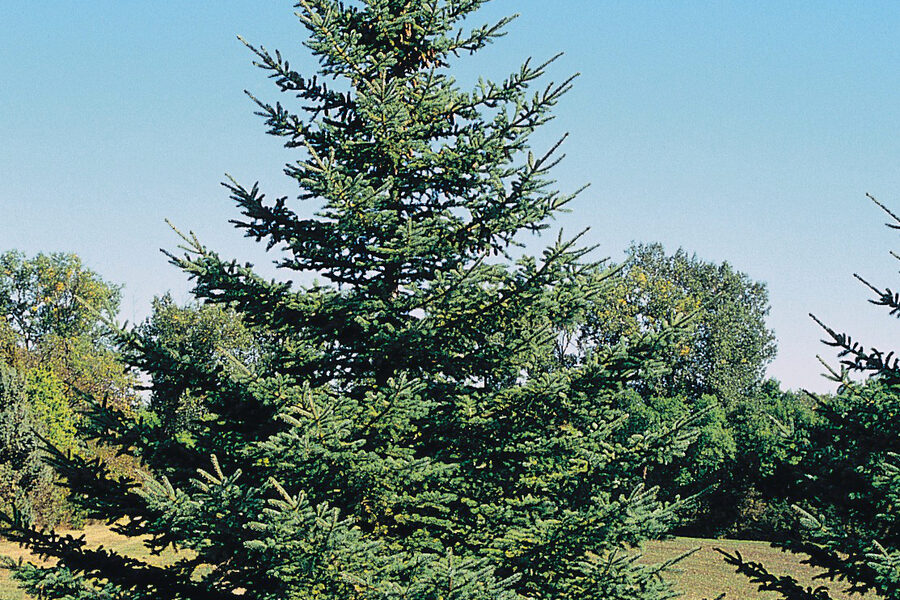
Mature Black Hills spruce with dense green branches

Black Hills Spruce

Picea glauca var. densata

Dense, dark-green conical evergreen — a classic windbreak and specimen tree with strong winter resistance.
Mature ht. 40 ftUse Windbreak / specimen
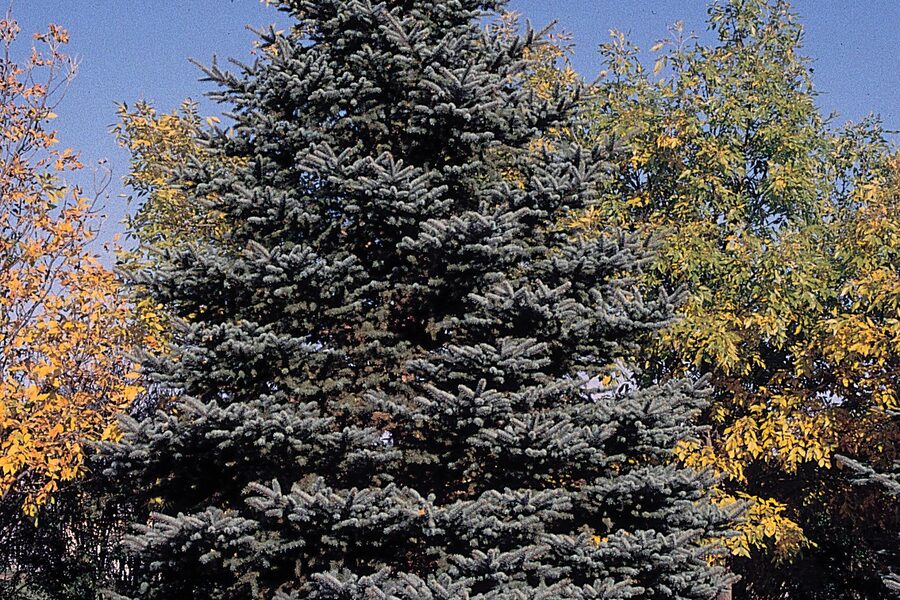
Mature Colorado blue spruce with silver-blue foliage

Colorado Blue Spruce

Picea pungens

Silver-blue needles and a strong pyramidal form. Drought-tolerant once established; a landscape favorite.
Mature ht. 60 ftUse Specimen / windbreak
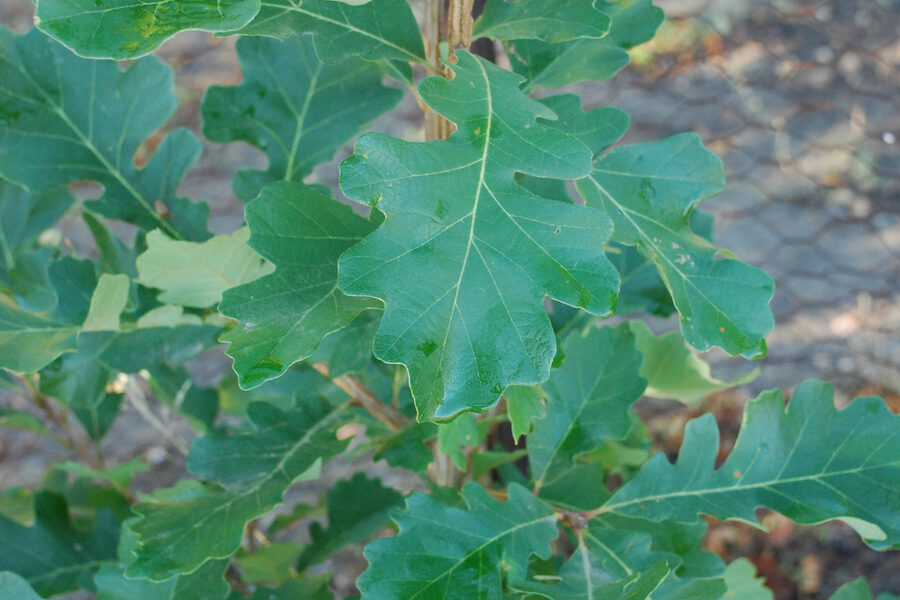
Distinctive lobed green leaves on a young bur oak

Bur Oak

Quercus macrocarpa

A long-lived native shade tree with thick, corky bark and acorns that feed a wide range of wildlife.
Mature ht. 50–70 ftUse Shade / wildlife
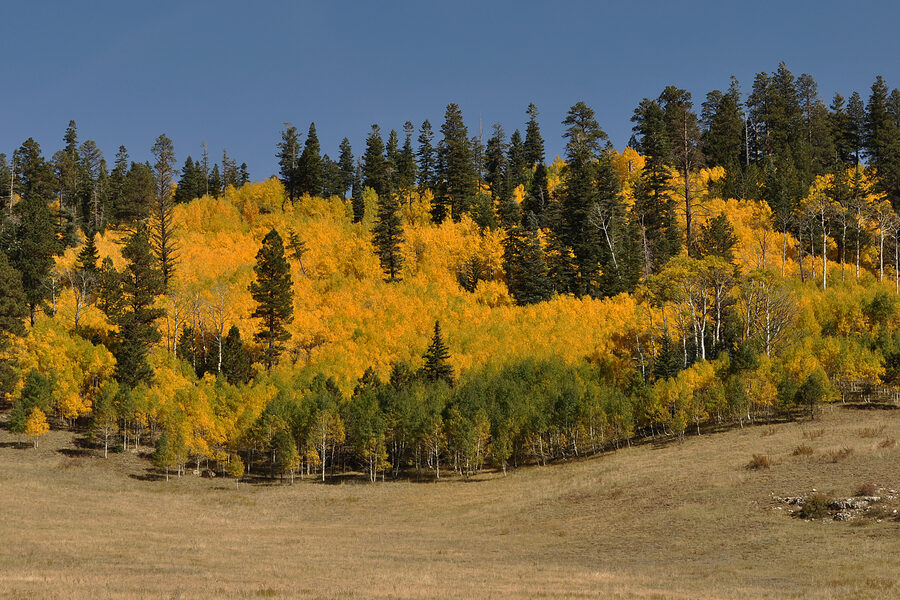
Quaking aspen grove showing bright gold fall color

Quaking Aspen

Populus tremuloides

Fast-growing native with shimmering leaves and brilliant gold fall color. Spreads readily once established.
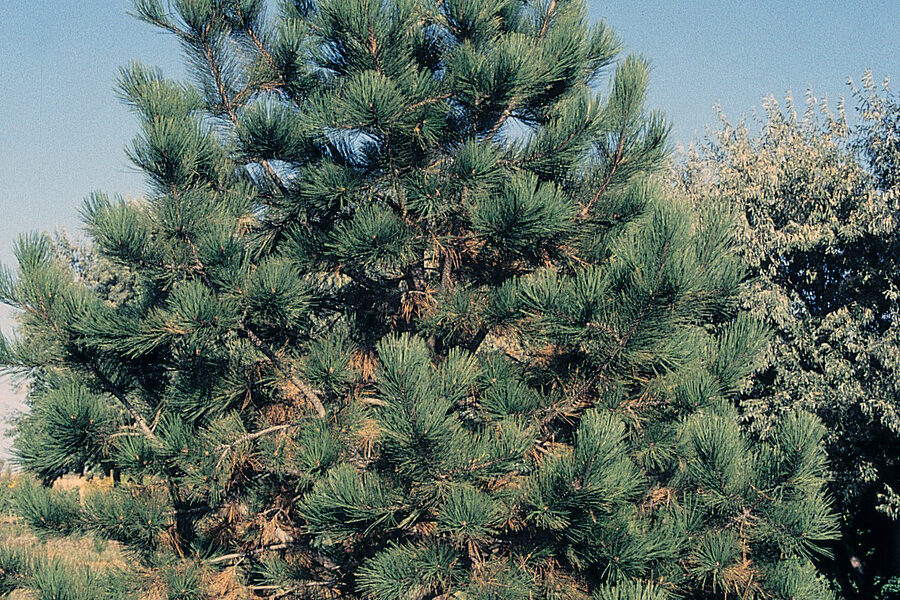
Mature ht. 40–50 ftUse Screening / fall color
Ponderosa pine showing its long dark-green needles

Ponderosa Pine

Pinus ponderosa

Long-needled and drought-tolerant, thriving on sandy or thin soils. A tall, durable windbreak pine.
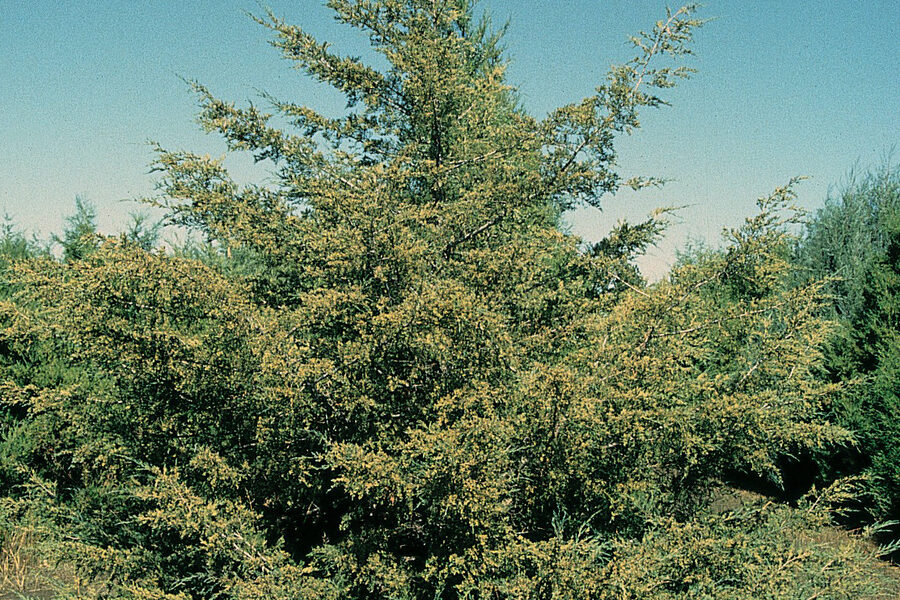
Mature ht. 55 ftUse Windbreak
Dense mature eastern red cedar foliage

Eastern Red Cedar

Juniperus virginiana

Dense evergreen valued as one of the best conifers for wildlife cover, with a rusty winter color.
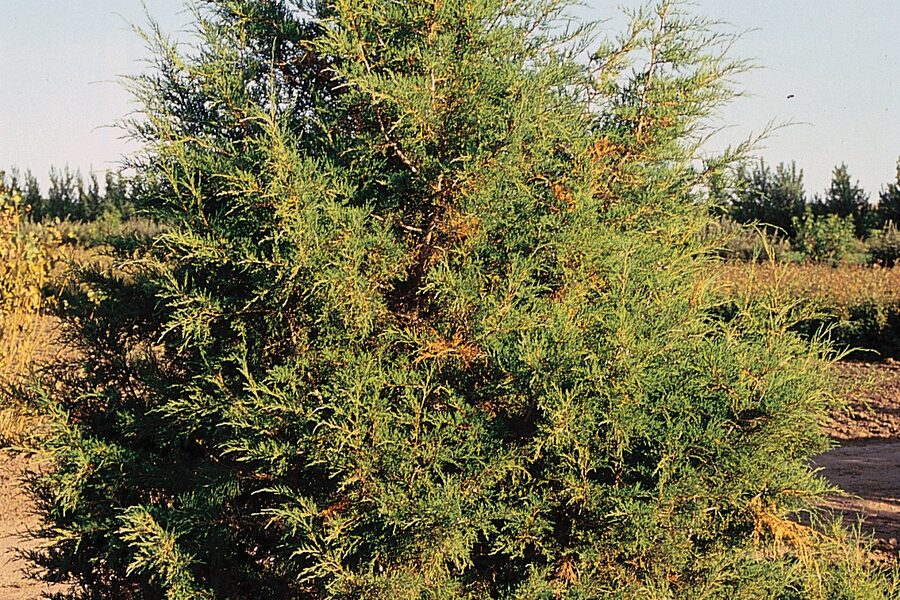
Mature ht. 25 ftUse Wildlife / windbreak
Rocky Mountain juniper with silver-green foliage

Rocky Mountain Juniper

Juniperus scopulorum

Silver-green, drought-hardy, and tough on marginal ground. A dependable windbreak conifer.
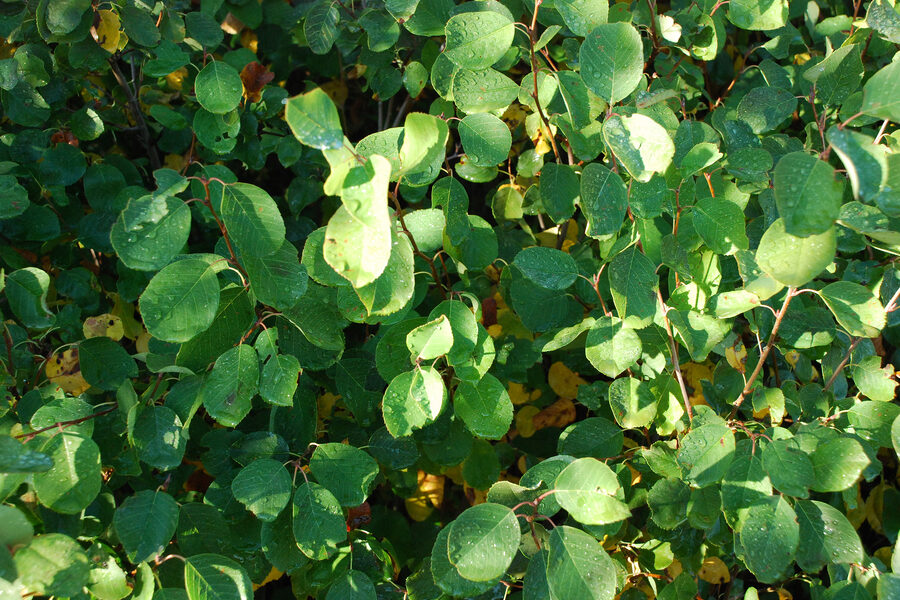
Mature ht. 15–30 ftUse Windbreak
Juneberry shrub with rounded green leaves

Juneberry (Saskatoon)

Amelanchier alnifolia

A multi-stemmed shrub with white spring blooms, sweet edible fruit, and orange-red fall color.

Mature ht. 8–15 ftUse Edible / wildlife
Wholesale (Limited) · Spring 2029 Orders

Also growing wholesale seedlings

Alongside our retail trees, we grow a small, limited run of bareroot and cutting-grown seedlings for conservation districts and farmers — shelterbelts, windbreaks, and riparian buffers. Seedlings begin growing in 2028 and will be ready for pickup in Spring 2029.

Species under consideration: Hybrid Poplar, Golden Willow, Redosier Dogwood, Siberian Peashrub, Nanking Cherry, and American Elderberry — all Zone 2–3, easy to establish, and grown to a plantable size in a single season. Final list depends on annual seed and cutting collection.

Minimum order 25 seedlings per species, pickup only at the Bottineau County nursery. Contact us for current wholesale pricing and to reserve Spring 2029 stock.

Contact us about wholesale pricing

Reserve your 2027 potted trees

Quantities are limited each season. Let us know which species and how many, and we'll set trees aside for pickup as soon as the 2027 crop is ready.